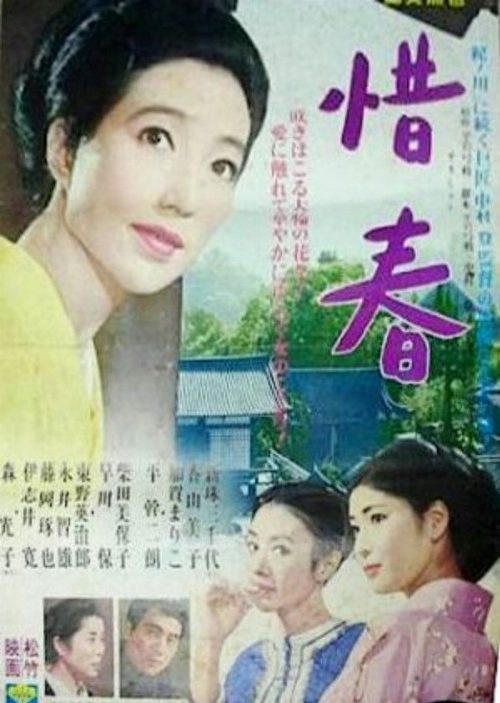
Three Faces of Love(1967)
About Three Faces of Love
When a gifted Japanese craftsmen dies, his three daughters are summoned to decide who will take over the family ribbon business in this family drama. Only one daughter cares to carry on her father's work, but she is met with resistance from her stepmother. One sister cares nothing for the artisan tradition, while the other is an icy opportunist whose only love is for money. It is the daughter who cares the most for her father's work who wanders away in a symbolic journey of self discovery.
The intricate tapestry of Japanese family cinema often finds its most compelling expression in the tension between ancestral legacy and the evolving ambitions of a younger generation. Three Faces of Love, a 1967 drama, serves as a poignant exploration of this domestic friction, centering on the transition of power within a traditional ribbon manufacturing household. Following the passing of their patriarch, three siblings find their disparate personalities clashing against the rigid expectations of their stepmother and the weight of their father’s artistic reputation. While the narrative framework might feel familiar to audiences accustomed to the emotional depth of Ozu or Naruse, this film distinguishes itself by focusing on the specific, tactile world of artisanal craft as a metaphor for identity and heritage.
In the current landscape of global cinema, where Indian regional industries like the Malayalam or Tamil film sectors are increasingly celebrated for their grounded, character-driven storytelling, this vintage Japanese piece offers a fascinating point of comparison. Much like contemporary films that examine the burden of family legacy in a rapidly modernizing society, this story highlights the internal conflict between personal autonomy and filial duty. The characters are defined by their differing relationships to the family trade, ranging from genuine devotion to cold, fiscal pragmatism. This makes the film a compelling study for viewers who appreciate slow-burn dramas that prioritize psychological realism over melodramatic spectacle. It speaks to a universal struggle: how to honor the past while carving out a future that feels authentic to one's own desires.
The film serves as an evocative time capsule, capturing an era where the lines between domestic stability and personal liberation were being sharply redrawn. By placing a daughter who truly values the family craft in direct opposition to a stepmother who represents the barrier to progress, the director forces the audience to confront the cost of preserving tradition. Those who enjoy nuanced examinations of interpersonal dynamics and the slow, often painful process of self-discovery will find much to admire in the measured pacing of this production. It is a work that values the quiet, unspoken moments of transition, making it a sophisticated addition for anyone interested in the foundational works of Asian mid-century drama. Whether one is a scholar of world cinema or simply a fan of deeply human stories, the film remains a thoughtful meditation on what it truly means to inherit a legacy.
Cast(11)