About Yoriko
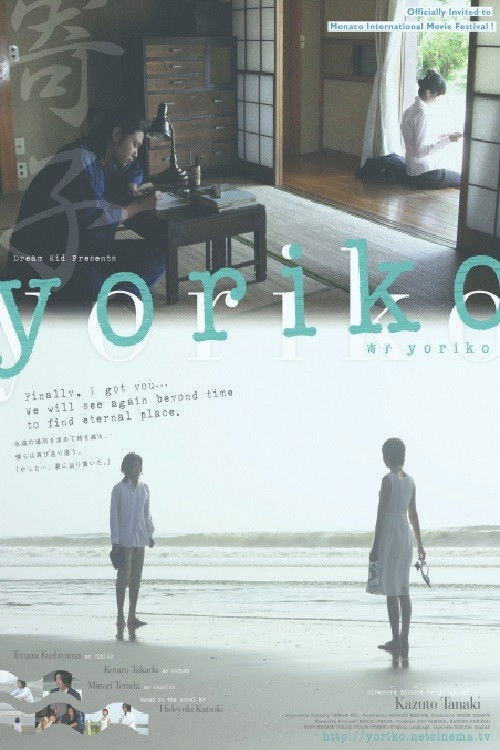
Satoru is a fledgling writer. When his latest manuscript is rejected, his editor, recognizing his talent, offers him a cottage by the beach to work in peace. At first, he struggles, but he is driven to write after meeting a girl, Yoriko, on the beach.
The quiet intensity of Japanese independent cinema often finds its most profound expressions in stories that prioritize atmosphere over elaborate plot mechanics. In the 2008 drama Yoriko, director Kazuto Tanaki crafts a meditative study of artistic frustration and the unexpected catalysts that can reignite a dormant imagination. The narrative centers on a young man attempting to establish himself as an author who finds his professional path stalled by a series of rejections. His retreat to a secluded coastal residence serves as both a sanctuary and a mirror, reflecting his internal isolation until a chance encounter with a mysterious local girl shifts his perspective entirely. This film stands out for its deliberate pacing and its commitment to capturing the subtle nuances of solitude, a stark contrast to the high-octane commercial cinema currently dominating much of the global box office.
For viewers accustomed to the emotional depth found in modern Indian regional cinema, particularly the evocative storytelling prevalent in recent Malayalam or Tamil dramas that explore internal landscapes, Yoriko offers a familiar yet distinctly Japanese sensibility. It belongs to a tradition of character-driven filmmaking where the environment acts as a secondary protagonist. The film is tailored for an audience that appreciates contemplative cinema, where the beauty lies in the quiet interactions and the unspoken tensions between individuals. By focusing on the intersection of human connection and the creative process, Tanaki ensures that the film feels intimate rather than cold. The performances, anchored by the presence of Minori Terada, bring a necessary groundedness to the ethereal nature of the seaside setting.
While many films about writers tend to romanticize the struggle of creation, this work leans into the vulnerability of the experience. It captures the specific anxiety of a person whose identity is tied to their output, making it highly relatable to anyone who has ever faced a significant creative block. The film does not rush its resolution, choosing instead to let the audience inhabit the space alongside the protagonist. It is an ideal recommendation for those who seek movies that linger in the mind long after the final credits roll, providing a gentle reminder that inspiration often hides in the most unassuming corners of our daily lives. As a piece of 2008 world cinema, it remains a testament to the power of minimalist storytelling to convey complex universal truths about belonging, artistic pursuit, and the healing potential of a simple, chance meeting.