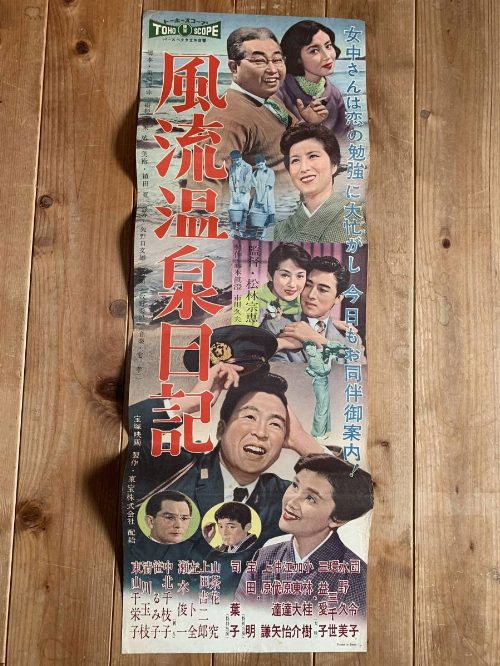
About Diary of an Elegant Hot Spring
At a coastal hot spring inn, a group of women navigate work, personal struggles, and unexpected scandals. When a guest threatens to expose one maid's past, she must decide whether to run or face it—with help from a kind local officer.
Stepping into the world of Diary of an Elegant Hot Spring is akin to peeling back the layers of mid-century Japanese social dynamics, where the quietude of a seaside resort masks a roiling undercurrent of personal secrets. Released in 1958, the film captures a pivotal era in Japanese cinema, one defined by the friction between traditional domestic values and the creeping influence of modernity. While Indian audiences are accustomed to the sprawling emotional tapestries of their own regional industries, this Japanese drama offers a more contained, pressurized environment. The hot spring inn serves as a microcosm of society, a place where the rigidity of class and the expectations placed upon working women come into sharp focus. Rather than opting for grand spectacle, the narrative finds its strength in the nuances of human interaction and the quiet desperation of those trying to maintain their dignity under the watchful eyes of judgmental guests.
The film is particularly compelling for viewers who appreciate the character-driven dramas often found in the works of directors like Yasujiro Ozu or Mikio Naruse, where the setting is as much a protagonist as the cast itself. The ensemble, featuring seasoned performers like Keiju Kobayashi and Yoko Tsukasa, delivers performances that emphasize restraint, reflecting a cultural emphasis on inner turmoil over outward melodrama. The story functions as a psychological study of vulnerability, centered on a maid whose life is upended by the arrival of an antagonistic visitor. As she grapples with a past she desperately seeks to keep buried, the narrative explores themes of redemption and the unlikely alliances that form when one is backed into a corner. It is a sophisticated look at resilience, distinguishing itself from the era’s more conventional romances by prioritizing the protagonist’s agency during a moment of intense crisis.
For those who follow the global history of cinema, this production provides a window into the aesthetic sensibilities of the late fifties, where minimalist storytelling met profound emotional complexity. It is an ideal watch for fans of classical narratives who find resonance in the struggles of individuals caught in the machinery of circumstance. By focusing on the interplay between the staff and their visitors, the director crafts a tension that feels both localized and universal. Whether you are a scholar of international film movements or simply an enthusiast of stories that examine the complexities of the human spirit, this film remains a testament to the power of subtle, high-stakes drama that lingers long after the final frame.
Cast(20)