
About Elder Sister's Diary
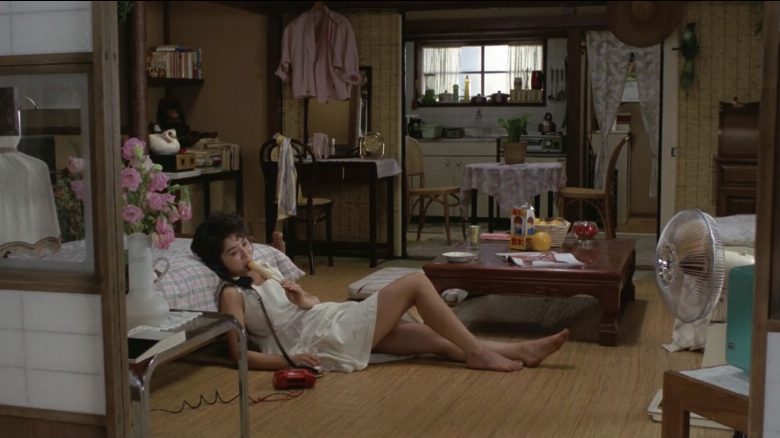
Hayashi Taro is still a high school student, but lives in Tokyo with Yuko, who works at a no-pan coffee shop. Shigeya Yoshida, an architectural designer in Yokohama, likes June and goes to hotels. Yoshida's wife, Hideyo, notices the existence of June and is very jealous. In addition, Hideyo had a younger brother named Kiyoshi, who had feelings similar to love for his sister. When June and Shigeya were dating Shonan at night, Hayashi Taro attacked Shigeya....
Hiroyuki Nasu remains one of the most intriguing figures of the eighties Japanese cinematic landscape, a director who frequently explored the intersection of youthful rebellion and the stark realities of urban life. Elder Sisters Diary arrives as a quintessentially atmospheric time capsule of that era, capturing the neon-soaked restlessness of Tokyo and Yokohama during a period of significant social transition. The narrative orbits around a high school student named Hayashi Taro, whose domestic life is anything but traditional, as he shares a living space with a young woman named Yuko. Their arrangement is set against a backdrop of unconventional labor and social friction, creating a tension that feels both specific to its time and strangely universal. By placing these characters in the orbit of an architectural designer named Shigeya and his suspicious wife Hideyo, Nasu crafts a web of domestic entanglement that moves beyond the typical romantic drama.
What makes this film particularly compelling for modern viewers is its unflinching look at the complexities of desire and the darker undercurrents of family dynamics. While many films of the eighties leaned into polished optimism, this drama chooses to linger on the uncomfortable edges of its characters lives, including the strained, possessive bond between Hideyo and her brother Kiyoshi. The inclusion of such themes suggests a narrative that is less concerned with traditional moral resolution and more focused on the psychological fragility of its ensemble. It serves as a stark reminder of the risks inherent in the pursuit of forbidden connections and the explosive consequences that arise when professional and personal boundaries are aggressively breached. For those who appreciate the gritty, character-driven dramas that emerged from the Japanese independent scene during this decade, the film offers a fascinating look at the alienation buried beneath the surface of a rapidly modernizing society.
Audiences who enjoy slow-burn dramas that challenge their protagonists with ethical dilemmas will likely find much to unpack here. The film functions less as a conventional story and more as a series of portraits depicting people trapped by their own choices and societal expectations. Whether it is the quiet jealousy of a scorned wife or the impulsive actions of a teenager caught in the middle of adult complications, every sequence is designed to heighten the sense of impending instability. As a piece of eighties cinema, it stands as a testament to the bold stylistic choices of Hiroyuki Nasu, who was never afraid to push his leads into uncomfortable territory. It is a recommended watch for students of film history interested in how domestic space and social status were used to construct narratives of longing and inevitable conflict in the late twentieth century.