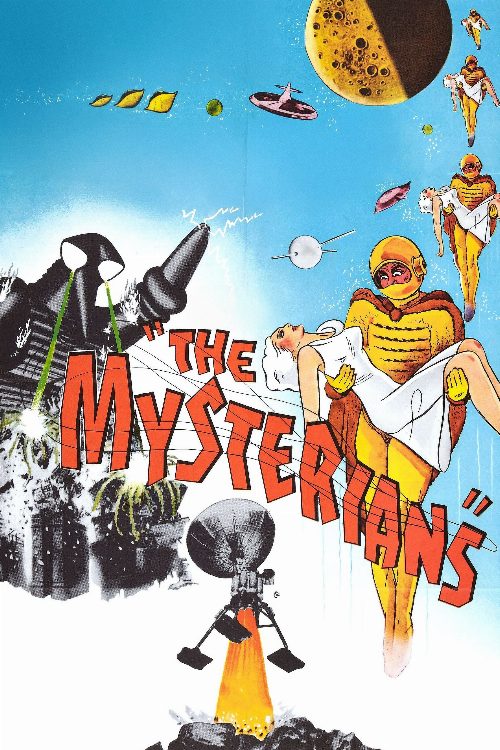
The Mysterians(1957)
About The Mysterians
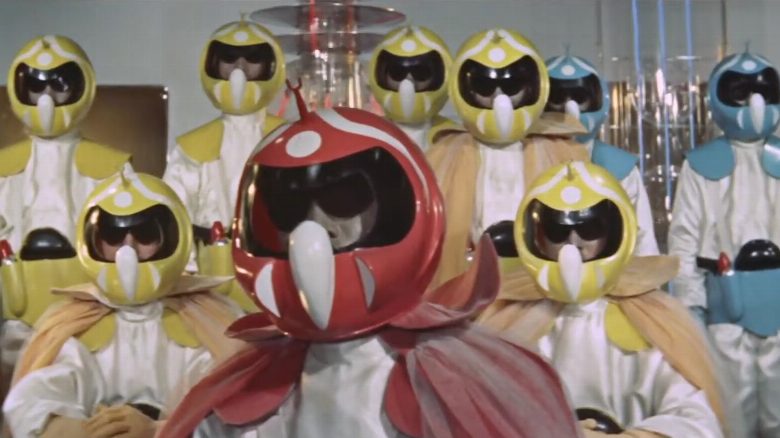
In Japan, scientifically advanced invaders from the war-destroyed planet Mysteroid cause an entire village to vanish, then send a giant robot out to storm the city by night, after which they request a small patch of land on Earth and the right to marry earthling women, claiming to be pacifists. Mankind must decide whether to capitulate or to resist.
Few mid-century cinematic experiences capture the post-war anxieties of Japan quite like the colorful, high-stakes spectacle of The Mysterians. Released during a transformative era for Toho Studios, this film serves as a landmark in the evolution of the tokusatsu genre, bridging the gap between somber monster allegories and the cosmic expansion of later science fiction. Rather than focusing solely on the destruction of urban landscapes, the narrative anchors itself in a chilling geopolitical dilemma, asking how humanity should react when faced with a technologically superior power that masks its imperialistic intentions behind a veneer of diplomatic negotiation. The decision to frame the extraterrestrial visitors as both invaders and refugees highlights the era's preoccupation with sovereignty and the delicate balance of global peace, themes that remain resonant for contemporary audiences who enjoy classic genre cinema with a philosophical edge.
Director Inoshiro Honda, already established for his work on Godzilla, utilizes the film as a vibrant canvas to explore the intersection of human ego and scientific hubris. The visual language of the production, particularly its pioneering use of widescreen color photography, elevates the conflict beyond typical B-movie tropes, creating an atmospheric tension that persists even when the giant mechanical threats are not on screen. While the cast features stalwarts like Kenji Sahara and Momoko Kochi, who bring a grounded sincerity to their roles amidst the spectacle, the true draw is the meticulous world-building that makes the threat of the Mysterians feel both alien and uncomfortably familiar. The film stands out for its ambitious scale, as it moves away from the singular monster format to embrace a broader, interplanetary scope that feels like a precursor to the grand space operas that would dominate global box offices decades later.
Viewers who appreciate the artistry of practical effects and the cultural importance of Japanese genre history will find this film essential viewing. It is particularly rewarding for fans of international cinema who enjoy analyzing how different industries interpreted the rapid technological advancements of the 1950s. By balancing intense action sequences with a slower, more deliberate exploration of international cooperation and military strategy, the movie offers a unique window into a nation still processing the scars of total war while simultaneously dreaming of the stars. Whether you are a dedicated collector of vintage science fiction or simply a curious cinephile, this production offers a quintessential look at how mid-century filmmakers managed to weave complex human dilemmas into the fabric of a high-energy, visually groundbreaking blockbuster.
Cast(40)